No meaningful progress in countering the HIV pandemic can be achieved if key populations are ignored. Just over a month ago, UNAIDS—the arm of the UN responsible for addressing HIV and AIDS across the globe—adopted a 26-page Political Declaration on HIV and AIDS. Female sex workers, men who have sex with men, and people who inject drugs—populations that are 14, 19, and 50 times more likely to have HIV, respectively—were mentioned only once. Once in a 26-page document!
Unbeknownst to the majority of meeting attendees, a group of 51 countries managed to dilute the declaration’s language and remove nearly every mention of these key populations. These countries also blocked 22 civil society organizations that advocate for human rights from attending the meeting.
What makes me angriest is the hypocrisy evident in the document. “Human rights,” for example, is mentioned 32 times, “stigma” 16 times, and “discrimination” 29 times. But how can we truly uphold human rights or address stigma and discrimination without naming and directly engaging the populations most heavily affected by HIV? Whose “human rights” is a declaration on HIV and AIDS supposed to be addressing if not theirs? It’s unacceptable.
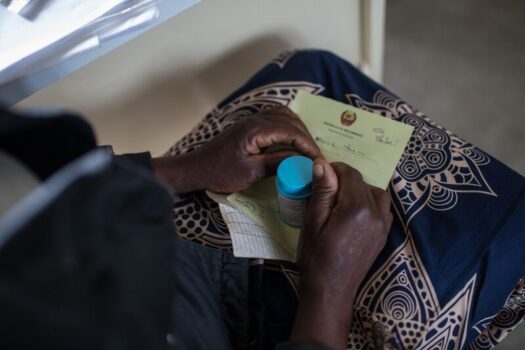
In Mozambique, 11.5% of the adult population is HIV-positive, the eighth highest prevalence rate in the world. As the Senior Country Representative for Pathfinder Mozambique, I and my fellow Pathfinders recognize firsthand the importance of meaningfully engaging key populations in managing HIV. Not only is this the right thing to do, it’s also the most sustainable, effective, and scientifically sound approach.
There is good news to report: In the last decade, antiretrovirals (drugs that treat HIV) have become more widely available and consequently, millions of lives have been saved. Widespread treatment has also bolstered prevention efforts. Once an HIV-positive individual is on treatment, his or her viral load (the amount of the HIV virus in the bloodstream) drops, and this significantly reduces the likelihood that s/he will transmit HIV to a partner. This phenomenon has led many experts to call for enrolling all people living with HIV into treatment programs. Employing a ‘test and start’ strategy, health workers are instructed to start treatment at the point of diagnosis, regardless of the person’s clinical HIV stage. Known as treatment as prevention, this strategy has gained a lot of ground with HIV practitioners.
Treatment as prevention by itself, however, ignores the structural barriers that prevent key populations from accessing and adhering to treatment in the first place. It also runs the risk of becoming oversimplified—a seemingly uncomplicated fix to an extremely complicated issue. When the goal is simply treatment, it becomes all too easy for countries to avoid the messy realities of confronting homophobia, accepting the necessity of needle exchange programs, and acknowledging that young people are sexually active. It also means countries don’t feel any pressure to decriminalize sex work.
Discounting the complexity of HIV prevention and transmission by focusing solely on treatment may be more politically palatable to many countries, but this approach will result in new infections, especially among the populations for whom the need is already acute. In a 2015 paper published in The Lancet, Peter Piot, a renowned HIV expert, joined others in the HIV prevention field to demonstrate the potentially devastating consequences of focusing too narrowly on treatment alone.
The only path forward is one that places renewed emphasis on prevention literacy (the ability to access, understand, and exercise prevention strategies) and the active acknowledgement and engagement of those vulnerable populations. Without their voice, there can be no lasting transformational change.