When Pathfinder launched the USAID-funded Building Healthy Families (BHF) project in September 2022, Pakistan was devastated by floods. The floods caused one-third of the country to go underwater, with 33 million people affected. The scale of the disaster has been unprecedented in Pakistan. Nearly 8 million people were displaced when their homes were washed away. Women and children suffered disproportionately, with their agricultural livelihoods devastated and lack of access to nutritious foods for themselves and their children.
Flexibility During a Crisis
The BHF project focuses on improving family planning and maternal, newborn, and child health (MNCH) outcomes. The project, which currently operates in 25 districts of Khyber Pakhtunkhwa (KP) and Sindh provinces, started at a time when Pakistan was in emergency response mode. The 10 districts in Sindh where the project initially focused were the most severely flooded.
Operating during a crisis required flexibility, the ability to be agile to changing circumstances, and close partnerships with the government and local organizations. The project quickly integrated crisis response activities into its program strategy, onboarding staff rapidly to respond to the floods and coordinating locally to ensure a quick and effective response.
BHF supported the Government of Sindh with responding to malnourishment and stunting among children. The project consulted with local partners, such as PPHI Sindh, and government priorities as plans, such as the Accelerated Action Plan for Stunting and Malnutrition, to determine the needs of malnourished children in flood-affected districts and how to address them. BHF integrated nutrition services with family planning and MNCH services, while strengthening communities’ resilience to climate change by establishing a referral mechanism between community-based providers and health facilities (public and private) to improve access to quality services.

During the first year of the project, BHF’s support to emergency flood response efforts in Sindh included:
- Distributing 1.5 million sachets of Ready-to-Use Therapeutic Food to 16,309 severely acute malnourished children.
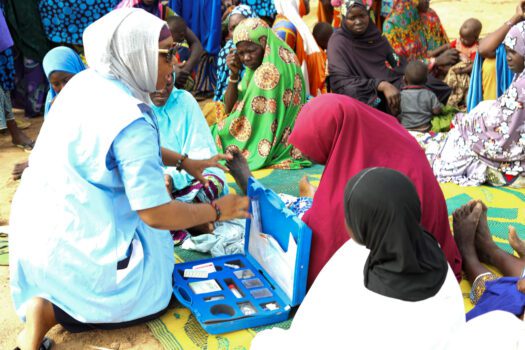
- Distributing 8,000 Lady Health Worker kits for basic screenings of mothers and children, and 40,000 dignity kits with personal hygiene equipment for mothers and girls in ten districts.
- Furnishing 100 outpatient clinics (90 public and 10 private facilities) for children ages five and younger with essential supplies to improve the assessment, classification of illness, identification of treatment protocols, and referral of malnourished children.
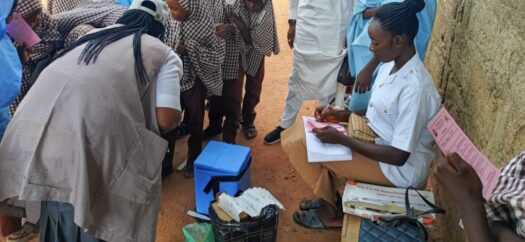
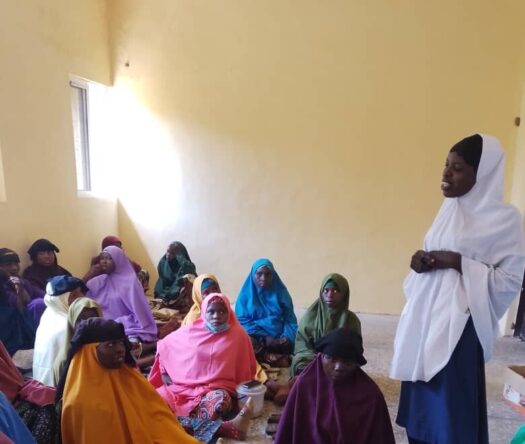
- Conducting 886 community-based health sessions, which included integrated messages about family planning; infant and young child feeding; MNCH; and hygiene practices with 8,826 caretakers of 15,770 children under age five.
- Establishing 100 birthing stations and handing over 150 standard delivery instruments to community midwives.
Critical Local Partnerships
The team faced many challenges. With the floods, came an economic crisis and devaluation of the Pakistani rupee, making it difficult to procure equipment and supplies for Sindh’s district health programs; where a normal procurement would take 15 to 20 days, deliveries were taking double the timeframe.
To ensure timely delivery in such challenging circumstances, BHF ensured quality planning and supply management, seeking guidance from local partners. The teams coordinated closely with district health offices to map out the districts that required deliveries, making deliveries in phases and prioritizing the most affected districts.
Deliveries were made in two ways to ensure timely execution:
- Procurements were sent to BHF offices in Islamabad and Karachi, with further dissemination from there to the appropriate districts; and
- Large procurements were delivered directly to district health offices and PPHI Sindh, a non-profit, previously owned by the government.
Photo to the right: Iqra, one-and-a-half years old, on her fourth follow-up visit to a PPHI Sindh site in Babarloi, Khairpur, consuming a USAID-procured Ready-to-Use Therapeutic Food, while sitting in her mother Sadaf’s lap. Photo: Pathfinder Pakistan

Working with our local partner PPHI Sindh has been critical. PPHI Sindh manages the nutrition program for the Government of Sindh. Operating since 2007, PPHI Sindh has the infrastructure (health facilities such as Basic Health Units and Rural Health Centers) in remote areas of Sindh. With insights into the health contexts in local communities, the PPHI Sindh partnership allowed BHF to deliver nutrition goods and services in flooded districts. PPHI Sindh has become a long-term partner of BHF in Sindh.
In addition to our local partners, it was critical to coordinate with private-sector and development partners to avoid duplication of efforts; for example, UNICEF also distributed Lady Health Worker kits to the Government of Sindh. To ensure supplies reached flood-affected districts equally, under the supervision of the Government of Sindh’s Reproductive Maternal and Neonatal Child Health Department, UNICEF and BHF distributed kits and supplies to separate districts.
Agility in the Aftermath
The BHF project continues to strengthen health systems for improved delivery of family planning and MNCH services—as it originally set out to do. Responding during the floods required the team to balance and merge short-term crisis response activities with long-term initiatives.
As the frequency and complexity of responding to natural disasters and other crises increase in Pakistan and around the world, we know that the ability to be agile, maintain strong relationships with partners, and work simultaneously to strengthen health systems while responding to emergency health needs in today’s world is crucial. At BHF, we remain ready to do both.
Building Healthy Families is a USAID-funded project led by Pathfinder Pakistan, in partnership with Greenstar Social Marketing Limited, Rural Support Programme Network, Chemonics International, and Research and Development Solutions