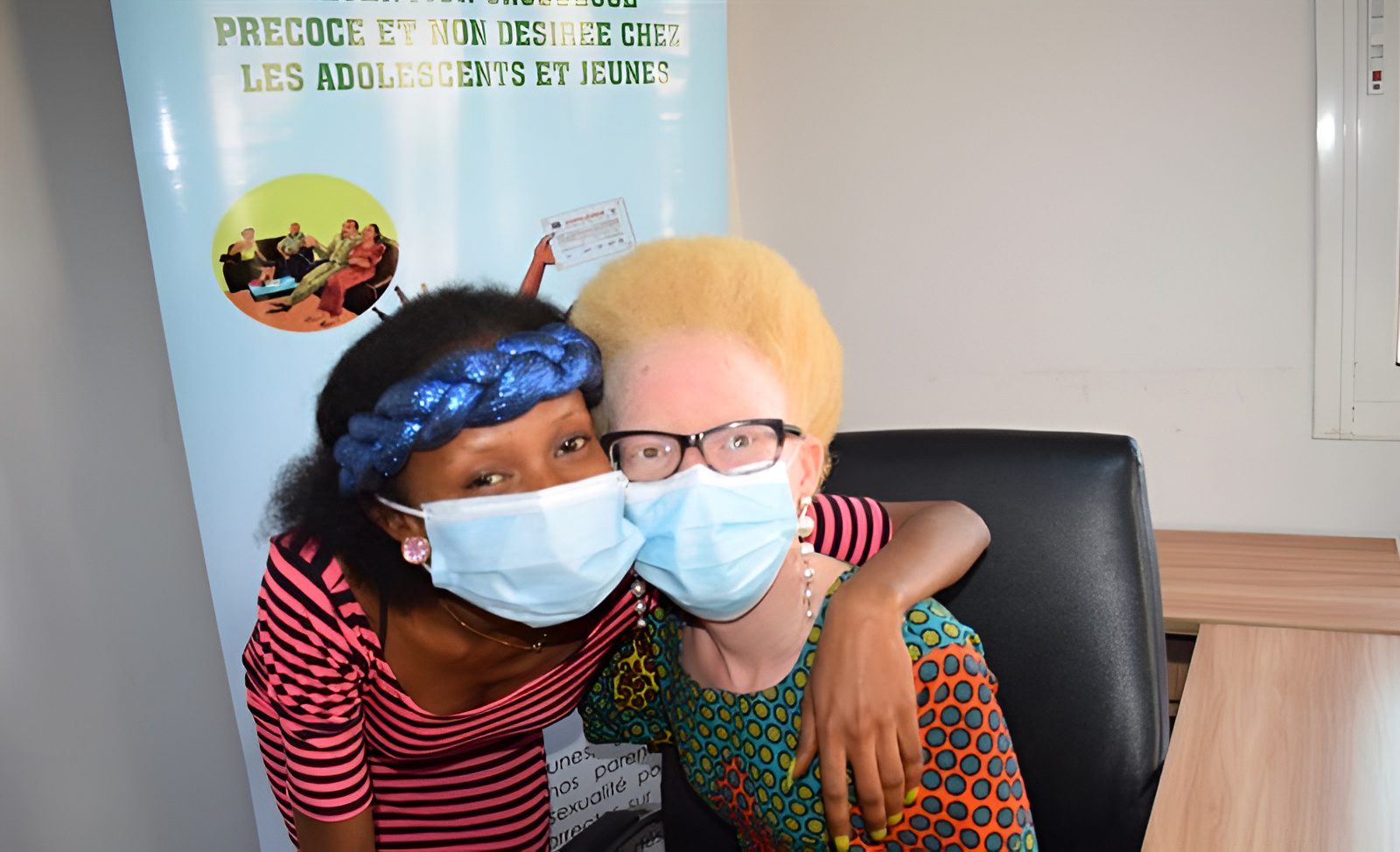
Edith Matondo, 23, grew up in Kinshasa, the capital city of Democratic Republic of the Congo (DRC), where people living with albinism face social exclusion, sexual and gender-based violence (SGBV), discrimination, and lack access to sexual and reproductive health (SHR) services.
Born with albinism, Edith has experienced these challenges firsthand. “There is a lot of prejudice, and people believe that having sex with someone living with albinism will cure a sexually transmitted disease. It’s been an ongoing fight to make people understand that [we] have normal sex lives… and that we are not a cure for any disease,” she said. Her experiences dealing with prejudice inspired her to promote a more inclusive environment and shatter the myths associated with albinism.
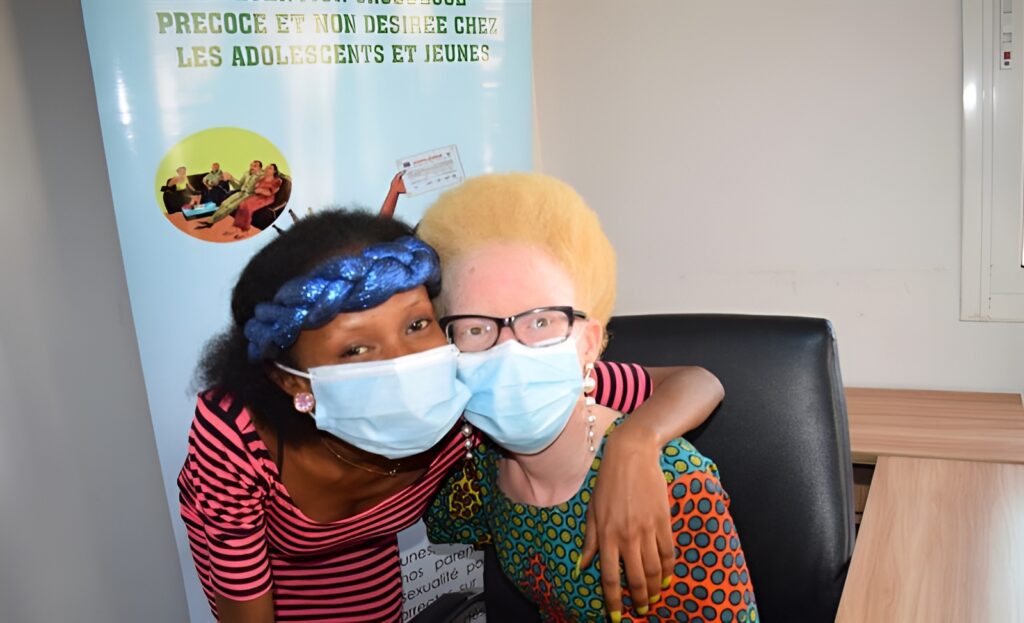
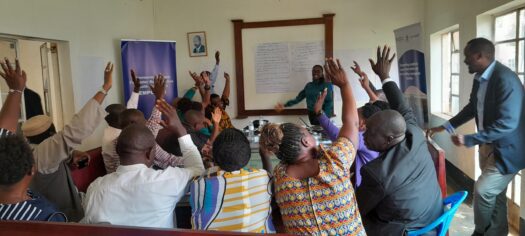
While studying medicine at the Protestant University of Congo, Edith became a member of the MWIMBA Texas Foundation—a nonprofit that advocates for the rights of people living with albinism in DRC. The foundation recommended her for a training that would allow her to become a peer educator in her community. Pathfinder’s Empowering Young People to Lead Healthy Sexual and Reproductive Lives in Kinshasa (DSSR Ado & Jeunes) project trained Edith to support youth living with disabilities who are often excluded from receiving SRH information and services.
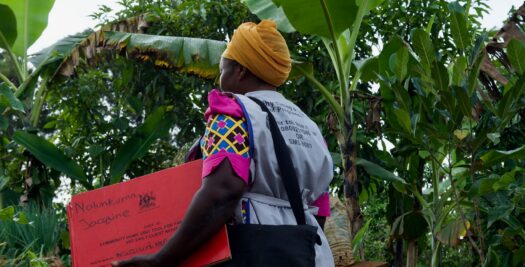
Edith is one of many young people Pathfinder has reached through the DSSR Ado & Jeunes project in Kinshasa. Peer educators, like Edith, play an instrumental role in raising awareness about youth-friendly services and ensuring inclusive access to SRH services and counseling.
Since 2014, the project—which is supported by the David and Lucile Packard Foundation—sought to achieve equitable, universal access to quality SRH services among young people aged 15-24 in Kinshasa. The project has empowered young people in Kinshasa to tackle harmful social and gender norms that undermine their SRH and rights, increased young people’s access to contraception and safe abortion services, and expanded services for survivors of SGBV.
Part of this important work involves responding to the unique needs of young vulnerable groups and gender-based violence survivors. According to the 2014 Demographic Health Survey, more than half of women and girls 15 years of age and older (52%) in DRC have experienced some form of intimate partner violence. People with albinism are especially susceptible. Edith has learned how to counsel and refer survivors.
Young people living with albinism sometimes experience violence, and they don’t know where to report it, or what to say. But after the training I received, now I know where to go. I can direct people to important services at youth corners. I can talk to youth about rape, unwanted pregnancies, and various methods of contraception. This is important information that allows them to live better lives.
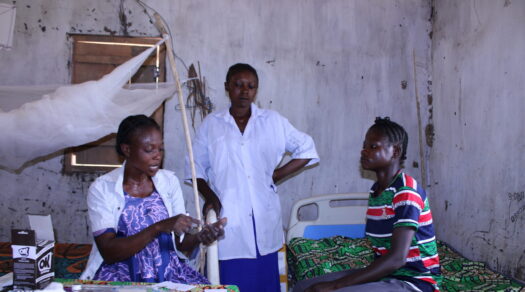
To ensure comprehensive SRH information and services reach even more people in Kinshasa, Pathfinder has set up 16 youth corners at schools, youth centers, and health facilities. These services are made accessible to all youth, most importantly youth with various forms of disabilities. At youth corners, young people can access:
- General counseling on sexual reproductive health
- Various forms of contraceptives, including emergency contraception
- Information about COVID-19 prevention
- Sexually transmitted infection diagnosis and treatment
- Gender-based violence services
- Psychosocial support
- Treat injuries
When asked about her future hopes and dreams, Edith said, “It is my dream to become a doctor and support women in childbirth. I would like to have a large clinic and employ people living with albinism. I would be also happy to see albinos [included in] the decision-making process of [my] country.”
To learn more about how we are increasing the accessibility of inclusive sexual and reproductive health information and services, watch the webinar below: